Photo: The Hindu Archives
Dear copypuppies 
Before you go all aww-goofy on me because I used the word puppies in a sentence, let me caution you. There is nothing cute in what follows. Think of this note as carrying three bags full of mixed metaphors and embodying that hated passive aggressive phrase “constructive criticism”. Or consider it a combination of advice and lecture - a lecture titled What This Job Takes. My own weary hope is that you will use it as a guide as it contains a few extremely practical tips and some, as the Jesuits like to say, spiritual direction.
The proof is in the proof reading.
Don’t wait for someone else to catch errors or mistakes - not just your errors. Mine, Jonah’s, Jane’s and Yasmin's. You’re the young sailor at the front of the unsinkable ship. It's cold and lonely out there but it's your bloody watch. Don’t reassure yourself that the captain is on the bridge, watching for icebergs. All you should care about or think about is that you are. Keep your eyes open. You can save the ship. You have to care. More than anyone else. There is no one else. The ship goes down, you go down. You are the watcher in the night. And winter is always coming. That's what this job takes.
Miss a deadline and you’re dead. 
That doesn’t mean I am going to kill you. But someone will. The account manager. The client.  Deadlines are not flexible. They are sacred. You have to come through in time. There are no options. Blood, sweat and tears. Constipation. I don’t give a shit. Make it happen. That's what this job takes. 
Work it, work it, work it.
The only way to ensure you come through on time is by working really hard at writing and ideating. You need four headlines? Write 400. Write, write, write. Be a maniac about writing.  The less you write the more your writing shows that you are not enough of a writer. Write, write, write. That's what this job takes.
Carpe the fucking diem.
Know what I mean? Don’t wait for someone else to suggest a good idea or to solve a problem. Jump in. Jump up. Put your hand up. Grab opportunities. If there are none, make opportunities. With every brief answer the brief. 400 times. Then ignore the brief 400 times. Then, come back to the brief. Give me another 400 lines/ideas/scribbles/brainwaves. Why 400? Well, I like 500 better. If you can keep going. Can you? Here’s the nub of it: if you can really count how many lines/ideas/scribbles/brainwaves you’ve had, you haven’t done enough. Keep going. You never know what you’ll find. A gold lion. A yellow pencil. A raise. That's what this job takes.
Write the wrongs out of yourself.
You want to be good? You want to produce great work? You want to be the writer whose writing they write about? You need to spend 10,000 hours doing the same thing. 10,000 hours ideating. 10,000 hours writing. Every iteration, every hour, makes you better. When you get to 3000 hours you’ll be horrified by the stuff that you’re writing now. When you get to 10,000 you won’t know how to write anything but good stuff any more.  You will have written the bad and the average out of you. That's what this job takes.
Passion makes perfect.
In my craft or sullen art... so goes the opening line from a poem by Dylan Thomas, a poem about whom he wrote poems for. Look it up. You don't read poetry? Well, young 'un, perhaps you should pursue a career as an art director instead. Or, maybe even consider switching to finance (I shall ignore that momentary whine of rage from the Beancounting District). Poets are writers' writers. Words do new things in the stubby stained fingers of these obsessive, ink-bottle-djinns. So. Read poems. Read everything. Make your reading wide. Make your thinking deep. Give a damn. Love the words. Love ideas. Seek them out in poems and rap lyrics and dispatches from war zones. And yes, in advertising too. There is even poetry there. I am not going to tell you where to find it. Go and bloody find it for yourself. That's what this job takes.
The best ad you ever wrote was someone else's.
This is what love's got to do with it. When you love the best advertising ever made, you can quote it or refer to it without hesitation. The best work ever done over the last 10 years - and way beyond that. Think going back 20something years is tough? Ha. You should be familiar with work that was done long before you were born. Tough is going back 60something years. Tough is being able to see the crap that will be done well into the future. Besides, making sure you don't make the mistakes that have been made before is easy. Making sure you don't have the same brilliant ideas that have been had before, that, dear (wo)manwolf, is difficult. So. Immerse yourself. Till you learn to swim in a sea of brilliance. That's what this job takes.
Don't kid yourself kid.
You’re a good kid. You’ve got many excellent qualities. You could do well. You could go far. But you have to rise to the opportunity you have. Make the most of it. Give it your best. Give it your all. Your heart. Your soul. Your sweat. Your tears. Your blood. Even your damn toenail clippings. You won’t regret it. And it's what this job takes. 

That’s it.  

Here endeth the lesson.
And oh, in case you were wondering: Dylan Thomas wrote his poetry for lovers. 
__
Gavin Barrett is Ideawallah at Barrett and Welsh, a Toronto agency where copywriting is critically important and where young copywriters are raised in captivity, fed a diet of milk, honey and great ideas and then released into the wild again.
__
The photograph is a rare portrait of 1913 Nobel Literature Laureate, poet and storyteller, Rabindranath Tagore, from the archives of The Hindu.

It’s been a loosely observed custom of mine to share, at this time of the year, some of the things I have stubbed my toe on as I gallivanted around the World Wild Web. After the initial swearing has subsided, my discoveries usually provoke in me some sort of ooh, ahh, oh! or huh? So here they are: my annual grab bag of tools, tips, trippy toys and other cerebral titillations. I hope they will do something for you.

  1. The music of many. The symphonic effect of the edits conducted on Wikipedia. http://goo.gl/bQq6sP
  2. The poem speaks. Classic and contemporary poems, one a day, read by poets and actors. http://goo.gl/CiSZyI
  3. Nate Rabe’s Sunday Sounds. For music worshippers who sway to the beat of a different tabla, this Sunday service from scroll.in can be a religious experience. http://goo.gl/FcIWUx
  4. How do we perceive the world? The search for the answer unites neuroscience, poets and artists — especially in these eight reflective videos presented by HarvardX’s Fundamentals of Neuroscience. http://goo.gl/yUzAih
  5. If you believe that all data related to you is yours and you’d like to see the work and thoughts of others instead of ads, then you might want to go where the artists have gone. To Ello, the anti-Facebook. As they say, “You are not a product.” http://goo.gl/lsmaOR
  6. It’s a jungle in there. The there being Cornell’s Macaulay Library, the world’s largest and oldest scientific archive of biodiversity audio and video recordings. I like to start at the staff picks. http://goo.gl/ONsGBc
  7. The seeker at the search engine. No, it’s not the title of a Paulo Coelho novel. It’s a naked portrait of curiosity. Google Suggest lets you see what others are asking when they search the web. http://goo.gl/JMYppB
  8. Al Jaffee’s fold-ins for Mad magazine, from the 1960s to whatever it is we call where we are, in interactive form. You may lose yourself in hours of obsessive, repetitive play, especially if you’re with Mary Jane. http://goo.gl/tMXoqQ
  9. No doubt you are mystified how a shaft of purely self-interested businesses (a collective noun of my own coinage) can masquerade as the “sharing economy”. Unsuck It is a powerful jargon-crap extractor, separating poop from premise with wit and wry self-awareness — or as they put it, unsucking your douchey jargon. http://goo.gl/mJTFH0
  10. I’d like to finish with another candidate (a strong ender contender?) for BFF in the battle against bullshit. The BlaBlaMeter is merciless. Insert your prose. Click the button. Rejoice if it emerges with a BS-free rating. If not, rinse and repeat. http://goo.gl/4XLWhw
And with that, a happy 2016 to ye.
We received a piece in the mail today: inspiring advice on creating great advertising from one of the best ad men ever, courtesy the Art Director's Club. Excerpted from a speech that George Lois made at the ADC's annual festival in Miami Beach. It's a scrappy, provocative, old school rant. It's also bloody good. Classic George Lois all the way. You can download a pdf and read all about it, via this link:
http://adcglobal.org/immortality/

Meanwhile, as a way of tipping our turban in George's general direction, here's a gallery of some of the man's best work.


Artist Patrik Svensson re-imagines famous movie posters in this elegant series of experiments.
His minimalist typography-driven designs inject zen and wit into the noise of Hollywood.


found via google on lostateminor.com

The sharp eyes of MediaBistro's AgencySpy team found this infographic at CollegeOnline (of all places!).

Highly debatable and extremely subjective. Which in my book, makes it well worth sharing.


Some of the most remarkable ads in the world took the position of the underdog. They celebrated their difference. They nipped at the heels of the big boys. They exploited precisely what put them down. Fat cats may sniff, but I think underdogs smell better. They spend their ad dollars better. They bark smarter.


Why does it work? This Nike spot (not an underdog brand, but one that understands underdog chemistry beautifully), explains it all.


There are good clean briefs. And then, there are the usual skidmarked travesties from the mind of supposed marketing maestros.

What separates the men from the boys? This ballsy little article from the Planning Lab looks at some great  (and not-quite-so-great) briefing forms from a few global agencies: The Better Brief - via the Planning Lab

Do you have a preferred briefing format, or do you favour the same approach as one commentator's one word ideal:  Why?


Advertising in a recession. The question isn't whether you can afford it. The question is, can you afford not to.

There is a famous quote on the topic, attributed equally often to Thomas Jefferson and Henry Ford. It goes "A man who stops advertising to save money is like a man who stops a clock to save time."


Google doodles at their best are a demonstration of the power of a brand to enliven one's imagination. I've picked a delightful few. Here they are and not in the order of appearance (c'mon, you can guess which is which) Cezanne's 172nd birthday, the Indian kite festival, Robert Bunsen's 200th birthday, Miriam Ruth's birthday, Van Gogh's birthday.

Look for all of them here.

There is something good here. Listen when you're not laughing.

Definitely worthy of a series of posts. Google's always transformational logos are among its best ideas. They keep the brand alive with change and rich with cultural treasure. Here's a beauty marking the birthday of the great sculptor Brancusi.


This video (from Intel's Visual Life series), featuring noted English designer Michael Wolff made me think about the little things that make us better creative people.


Multicultural wealth is intellectual treasure. Shakespeare knew that when he borrowed from Boccaccio and Ariosto.

I've always believed that diversity gives us inspiration, sources, variety, talent - that it enriches us culturally because it expands our knowledge.

So it was a pleasure to discover this 24 min video by the VCU BrandCenter. It's a thought provoking look at the impact of diversity on advertising and how it has brought us to the edge of a new creative revolution in the industry.

Pursuit of Passion: Diversity in Advertising from Jacob Abernathy on Vimeo.


And here's one from Skittles' Touch the Rainbow series. A simple, whacked idea that is extremely immediate and incredibly effective.

Evian and Skittles are doing some genuinely engaging YouTube work.
We knew the Evian babies could roll. Now we're seeing that they rock.

Check it out.


In search of that holy grail, the elusive, perfectly distilled creative brief I've come up with this one-line format.

What and what and why, to whom and when and where, for how much?


What we're saying/doing and what is the proof for it: the message and the substantiation
why: the insight and/or objectives
Whom: the target
When: release or air dates, deadlines,
Where: media/context
How much: budget.

The brief itself doesn't have to be forced into one sentence. Here's an example of how I imagine the original iPhone brief might have looked like if it had been in this format.

The iPhone is the sexiest, most powerful, most natural phone you've ever seen, with touch-screen tech, gesture driven navigation and 1000s of apps that actually make your life better (what).
We need to launch it (why), to anyone who has fingers (whom), by March 2008 (when), in print, outdoor, TV and web (where). The total media and production budget is $150 million. (how much)

I suppose if you insisted, you could tag on a "What else?" to accommodate things like "Follow brand guidelines. Use new logo. Avoid Windows-like imagery." But really these are quibbles and details and the essence of the brief is the one line.

It's about loving the box - like a child does.

Try your hand it - use an established campaign like I did and write what you believe the one-line brief for it would have been.
Nike's Just do it. Energizer's Bunny campaign. Budweiser's True. Molson Canadian's "I am Canadian", are some that spring to mind. Post your pathetic attempts on our FB page.
There may be some cheap wine in it for you.


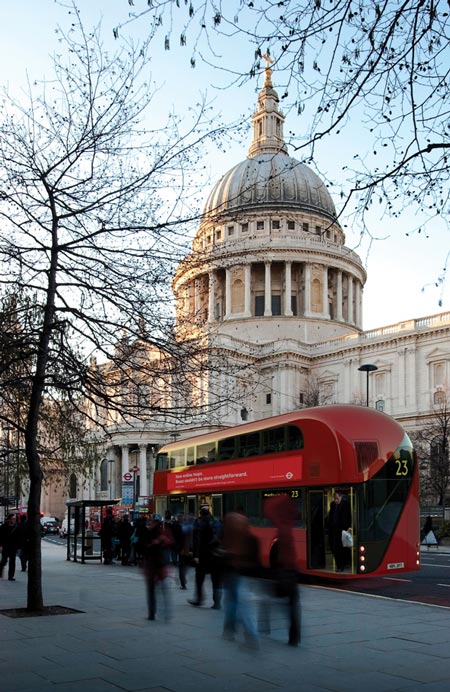
Photo via flickr user Yosigo. Copyright Yosigo.


To all promoters, champions and fans of transit and public transportation. Spread the word. Another winter reason to ride, courtesy Statoil.
Will post credits and kudos when I find out whodunnit.


What could possibly make you want a mobile phone so much that you'd pay the equivalent of 5 month's salary to get one?

JWT Beijing, led by Polly Chu (we both worked at JWT HK at the same time, aeons ago), picked Bruce Lee to twist your arm - and mess with your mind - to promote Nokia's N96 Bruce Lee Ltd edition phone to Chinese early adopters.

Big social network users who look for authentic viral experiences, the target wants the bragging rights that come from being first-finders. It's what I call the Speke Effect (after the discoverer of the source of the Nile).

The ad got 16+ million views worldwide - it went viral well beyond China. The phones sold out in 5 days online.
Smashing stuff.

Advertising Agency: JWT Beijing, China
2nd Sales Promotion/Advertising Agency: A4A Beijing, China
Chief Creative Officer: Polly Chu
Creative Director: Shankun Sun
Copywriter: Wei Huang
Art Director: Dechun Qiu
Producer: Lin Ma
Director-In-Charge: Dan Ingall
Senior Account Director: Patrick Yap
Director: Jinjing Zhu, JQK Productions
Producer: Jade Tang, JQK Productions
Post: Wang Yu, JQK Productions


It's a big week for transit and sustainable cities in New York Time's T magazine. No less than five different travel and transportation innovations were mentioned in this travel issue. Teague's barebones stripped-down vision for high fuel efficiency flying - labelled Flight 2.0. A nod at Inspiro, BMW Group DesignworksUSA exciting new subway train design for Siemens. Joey Ruiter's Inner City unchained unicycle-based back-to-basics bicycle. Priestmangoode's double-decker bullet Mercury Train. And Thomas Heatherwick's modern icon for an old one - a replacement for London's classic, red open-platform, Routemaster double-decker buses. Woohoo.

I am fond of saying that in today's Canadian market, if it ain't multicultural it ain't mainstream. But the more multicultural our markets are, surely the more fragmented they become? Not so.

The way I see it, it's not our new multicultural society that's fractured - it's old mainstream that is fracturing.

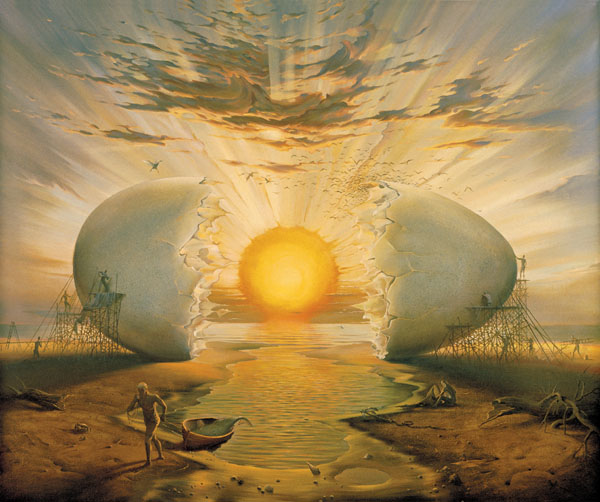
But wait, there's no reason to panic. It's not as bad as it seems. All this fracture business sounds painfully like we're talking about a bone breaking when in reality we're talking about an egg, hatching.

After all, we never really had a homogenous culture in bilingual Canada - and perhaps bilingualism and the distinct identities of Quebec and the First Nations were always a sign that this idealized (by some) homogenization would never come to pass.

Our changing demographics tell us that this is now a matter of fact, not opinion, borne out by the 2006 census (the fruits of the sainted "long form"). 6.1 million Canadians were born elsewhere and that population is growing 4 times faster than the Canadian born. The 1.1 million new Canadians who arrived between 2001 and 2006 accounted for 69% of all the population growth.

If advertising and marketing courses don't begin teaching multicultural marketing and advertising now, they'll be turning out students who will see markets that don't resemble their textbook markets in the slightest way. At the very least, they need to begin changing their syllabi now. Multicultural advertising and marketing needs to be taught, at least as a module in established courses.

In about five years, the mainstream as we know it today will have changed - by 2017 it will be an entirely different marketing reality and by 2030 it will be a brave new world for the bright, smart marketers and universities who took what their stats and research departments told them and applied it to their strategies and syllabi.

The fundamentals aren't changing because the new mainstream is a different colour. It's changing because the new mainstream is fundamentally different in every way - culture, conservatism, language, religion, cultural habits around money (saving it and spending it) and cultural habits around food. And the most fundamental thing about advertising/marketing is that it is about how people work. This is not an old "us" vs. a new "them". This is just a new "us."

One of the cool things about Canadian immigrants is that they want to be Canadian and they are proud to be Canadian, but they also discover very early that it is really difficult to define what "Canadian" is. Ultimately however, they come to realize in a single, empowering, incredibly Canadian moment that being Canadian is... being themselves.

And that is why I believe we need Canadian industry to invest in understanding this new emerging mainstream better - it's not going away. It's going to get stronger, richer, more vibrant and more challenging to deal with. Preparing for it is simply good business.

In fact, in our multicultural, polyglot, many-hued future, our local need for hybrid minds is going to serve us well globally - a rare instance where Canada is destined to be uniquely competitive. This is a time to learn how to spread our wings. One day we're going to have to fly. If we don't, we're going to have egg on our face.

Sunrise by the Ocean by Vladmir Kush via www.vladimirkush.com © 2008 Kush Fine Art. All Rights Reserved.

Popular Posts

@ Gavin Barrett. Powered by Blogger.

Plagiarism Watch!